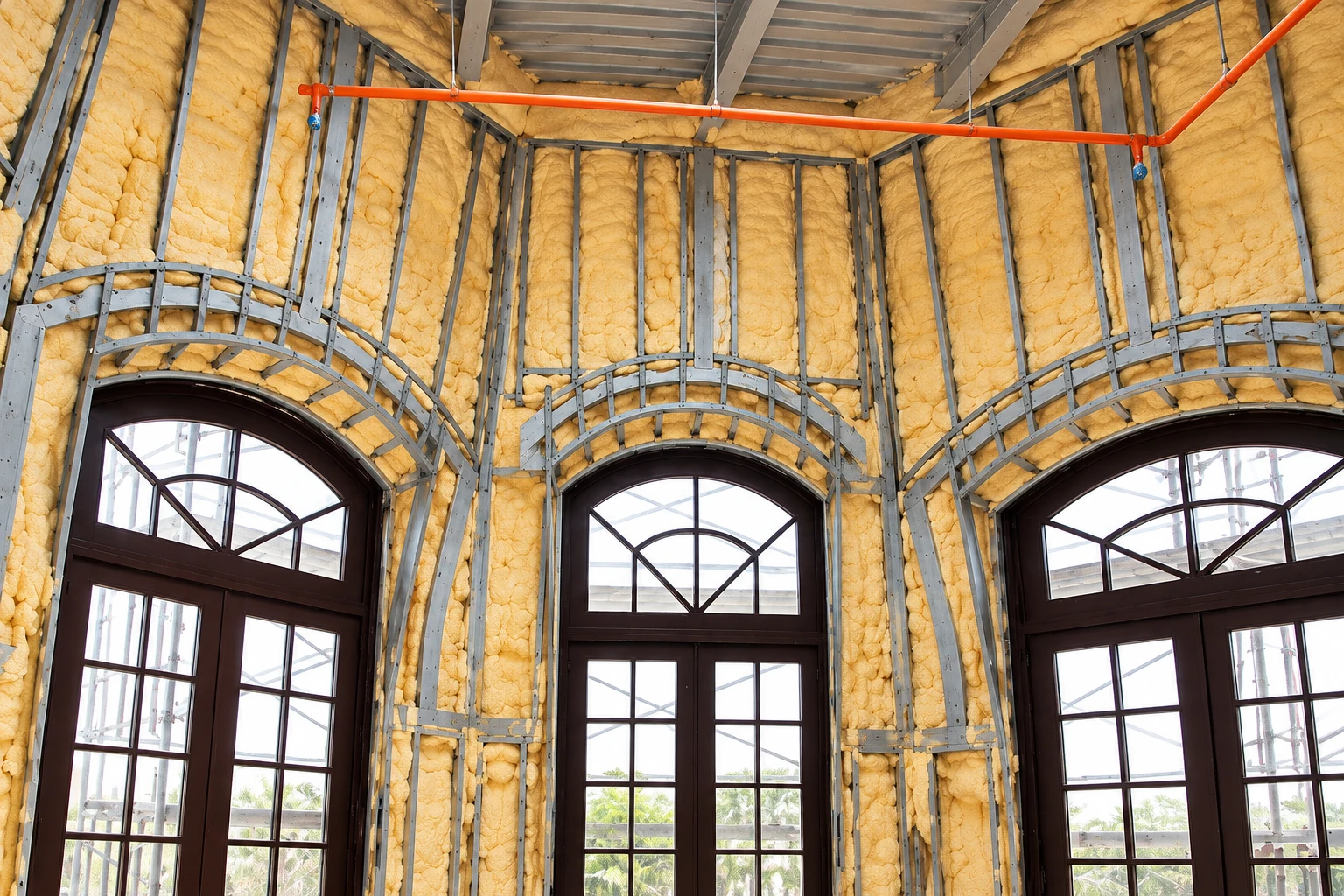
Wall insulation in Kennewick WA - closed walls filled full and packed firm
Cold rooms and drafty outside walls in an older house? We fill the empty wall cavities so those rooms hold their heat.
- Fully licensed and insured.
- Free on-site estimates.
- Expect a reply within 1 business day.
How we get wall insulation into closed walls
Filling walls from inside
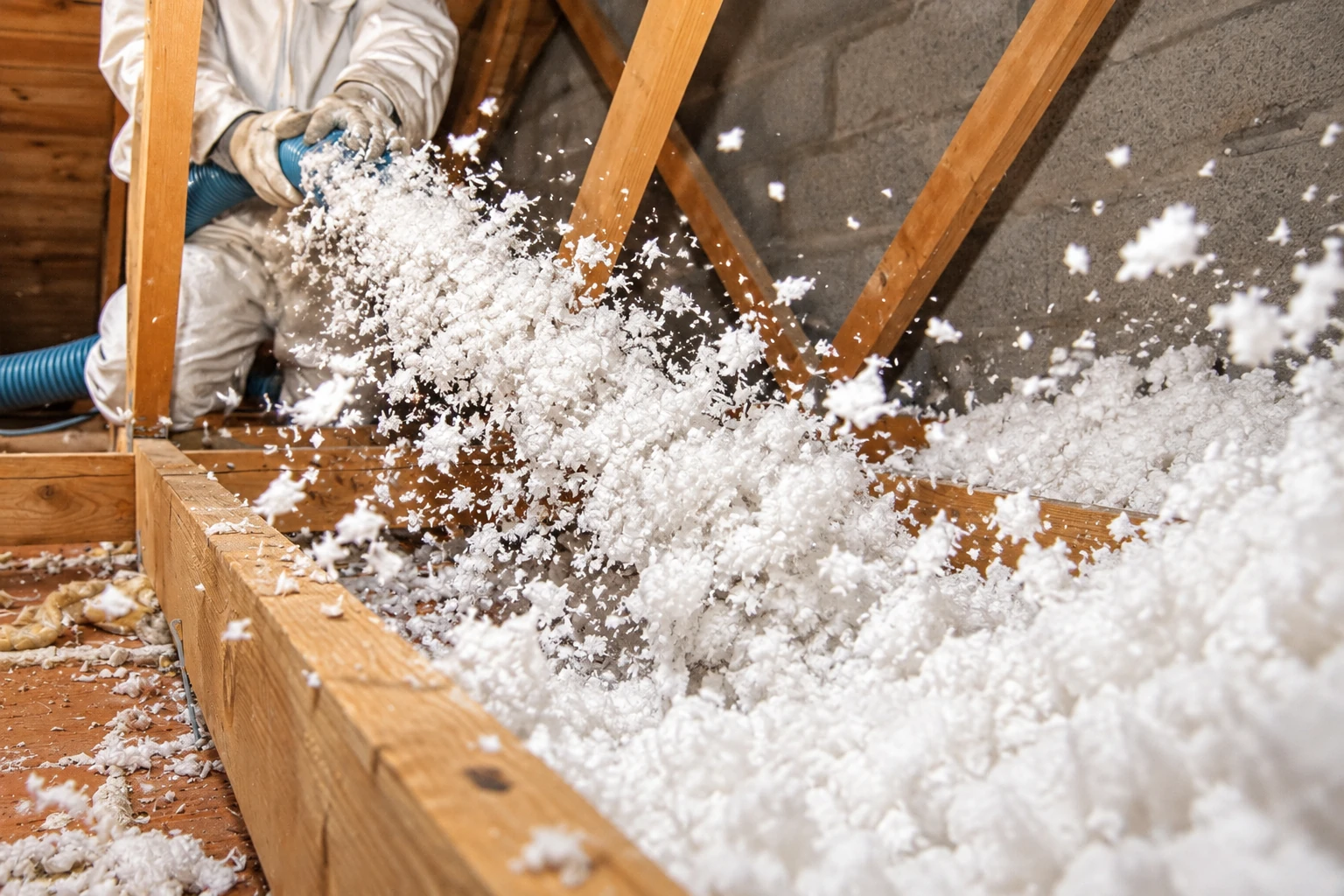
We drill from inside into each stud bay, the space between studs, blow it full of cellulose and patch the holes. It suits siding that's hard to lift.
Filling walls from outside
We lift the siding where needed, drill into each cavity from outside, blow it full and put the siding back. It keeps the dust and patching out of your rooms.
Can you insulate walls that are already closed up?
Yes. Wall insulation in Kennewick, WA, for an older home with empty wall cavities is usually done by drill and fill, where we drill small holes into each cavity, blow insulation in and seal the holes, so the outside rooms hold heat without the walls being torn open.
Most of these calls start with a bedroom on an outside wall that never warms up, or a power bill that keeps climbing in a house built before anyone thought to fill the walls. The price turns on how many walls need filling, whether we work from inside or outside, what your siding is and how much patching follows, and the schedule turns on those same things plus whether the city wants a permit for your job. Your written estimate lays out what your walls need, step by step, before you agree to anything.
Wall insulation, from first hole to final patch
I start by finding out which walls are empty and what they're built from, because that decides how we fill them, and walls below ground get their own plan as basement insulation.
Choosing the side to work from
We go over inside versus outside with you, based on your siding and which rooms you can spare, before anyone picks up a drill.
Sealing the leaks first
Where your house leaks around the walls, we handle air sealing before insulating, because insulation does less against a draft that's still coming through.
Drilling and filling each bay
We drill into every stud bay and blow it full, including the short bays under windows and the odd-shaped ones older framing leaves.
Checking the fill and patching
We check that each cavity is full and packed firm so it won't settle into empty spots, then patch every hole and refit any siding.
Why homeowners call Reliable Kennewick Insulation Services
I started this business in Kennewick in 2013 after learning the trade on another contractor's crew. I care most about the parts nobody sees once we leave, and I want you to understand what you're paying for before you agree to it.
I check every wall before we finish
I come out to see each job myself, our installers do the filling, and I check their work before we call it done, because a half-full cavity doesn't show until winter.
Licensed and insured on every job
We're fully licensed and insured, and we're glad to have you check us the same way you'd check anyone you're letting drill into your walls.
A straight answer before work starts
If something in your house needs fixing before we can insulate, I'll tell you plainly rather than fill the wall and work around it. Satisfaction guaranteed.
What happens after you call about wall insulation in Kennewick?
We plan the work around your house. If your job needs a Kennewick permit, review usually takes up to 15 business days once the application is complete, or 2 to 3 as an express permit with a 20% fee.
or call (509) 396-5461
Call or send the form
Call (509) 396-5461 or use the form, and we'll set a time for me to come out to your house.
I look at your walls
I see which walls are empty and what the siding and inside walls are like, and I ask how the house has been behaving.
Your written estimate
You get each step written out in the order we'd do it, with the reason it comes there, so you know what you're paying for.
Free on-site estimate for wall insulation and air sealing
Tell us your home's age, your siding and whether the walls are wood frame or masonry, and we'll reply within one business day to set up my visit. The estimate is free and there's no pressure to book.
Wall insulation questions we hear
Is it better to insulate existing walls from inside or outside the house?
Both work, and your siding usually decides it. From inside, the holes get patched or hidden behind a chair rail molding, and installer guidance calls for covering the floor and closing off the work area so dust doesn't spread. From outside, siding comes off where needed, and many types like vinyl, aluminum and steel can be loosened with a siding tool, so if you were already planning to re-side, that's the best time to add a layer of insulation across the outside of the wall too.
How much does wall insulation cost in Kennewick?
Installing blown-in wall insulation usually costs about $4 to $4.50 per square foot across the US. That's the going rate nationally, not our price. Your own figure comes from the written estimate once I've seen your walls.
Will blowing insulation into my walls stop drafts?
It can cut drafts through the walls quite a bit, because dense-packed cellulose, insulation blown in tight, slows air as well as heat inside the stud bays. It doesn't reach the leaks where the foundation meets the first floor, between floors or where the walls meet the roof. Those need their own work, which is what our air sealing services cover.
What causes blown-in wall insulation to settle?
Settling usually happens when a cavity wasn't filled completely or the insulation went in too loose, so over time it slumps and leaves empty pockets. Blown-in fills odd-shaped and hard-to-reach cavities well, but only when it goes in dense enough to hold its place. Ask any installer you're considering how they check for a full, dense fill.
Can you blow insulation into brick or block walls?
Usually not with cellulose, because the cellulose industry's trade group advises against using it to fill masonry wall cavities or walls below ground. If your house has brick or block walls, I'll tell you that at the visit and talk through what makes sense instead. Walls below grade are a basement insulation job.
How do I check that an insulation contractor is registered in Washington?
Look the company up in the Verify a Contractor, Tradesperson, or Business tool from the Washington State Department of Labor & Industries, where registered contractors appear. State law requires every construction contractor to register with L&I and to be bonded and insured. If an installer isn't listed, keep looking.
Other work that pairs with walls
Air sealing services
Leaks around the sill, outlets and the attic floor let cold air slip past any insulation, so sealing them makes the rest of the work count.
Explore Air sealing servicesBasement insulation
Bare foundation walls in a basement can keep the floors above cold, and those walls need a different approach than the wood-frame walls upstairs.
Explore Basement insulationAttic insulation
A house losing heat through its walls is often losing it through a thin attic too, so checking the attic at the same visit shows where to start.
Explore Attic insulation
Wall insulation in Kennewick and the cities around it
The City of Kennewick issues residential permits for new single-family homes, remodels, additions and miscellaneous residential projects, and its list doesn't name wall insulation, so the list alone doesn't settle whether your job needs one. Before we start, we check with the city's building office, and when a permit is needed we take care of it with them, including the in-person application the city requires for miscellaneous express permits, which are paid for when you apply. Rules differ from one city to the next, so we ask instead of assuming.
We're based in Kennewick and work across the cities around it on both sides of the state line. Many of the older houses we see here and in Pasco and Richland have wood-frame walls that were closed up with little or nothing inside, which is the house drill and fill suits best.