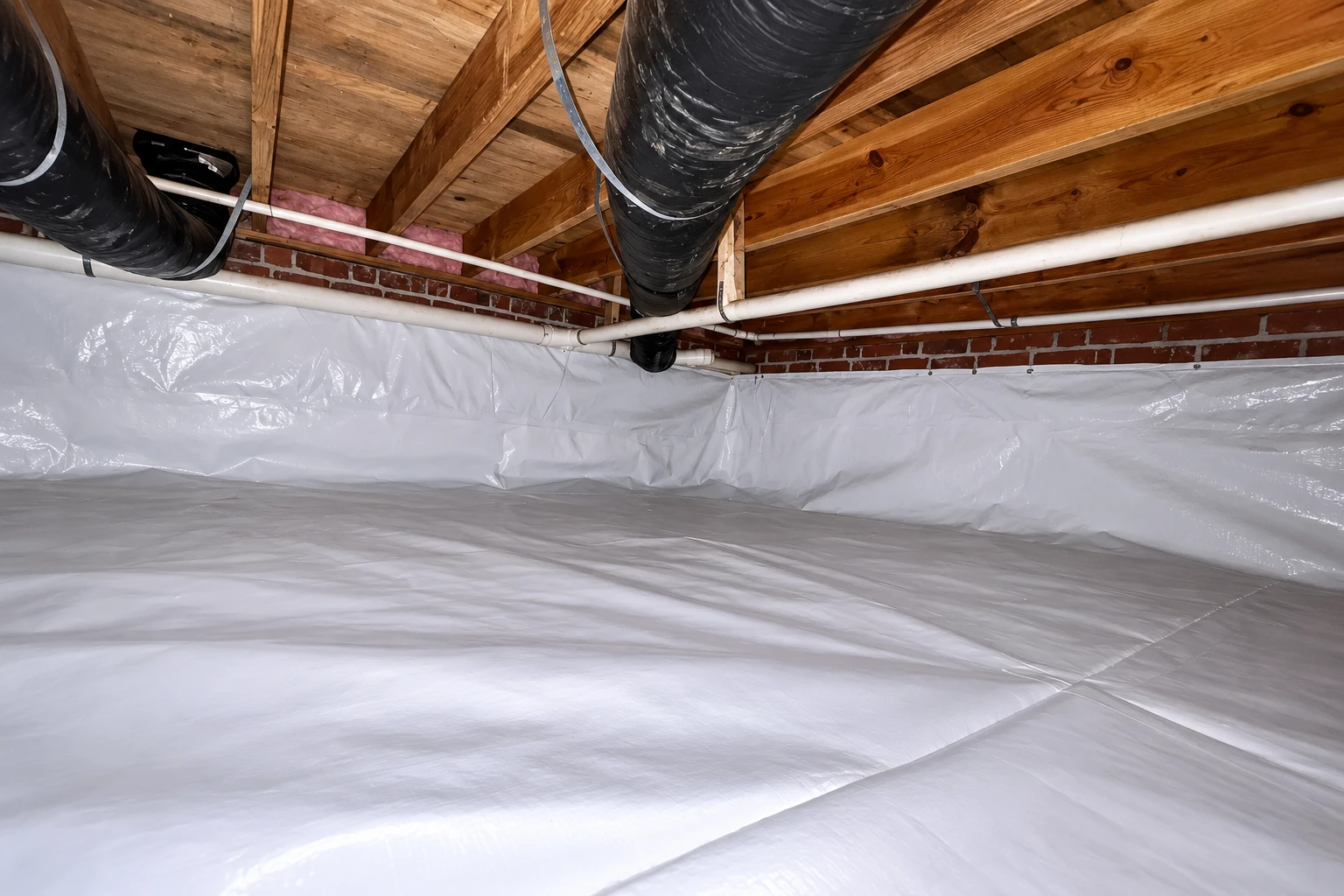
Crawl space vapor barrier in Kennewick WA - covered wall to wall, seams sealed
Musty smell, damp dirt or torn old plastic under the house? We find where the water comes from, then cover the whole crawl space floor.
- Fully licensed and insured.
- Free on-site estimates.
- Expect a reply within 1 business day.
Crawl space vapor barrier options we install
Ground cover with vents open
Heavy plastic laid over the whole dirt floor, overlapped at the seams and run to the walls and piers, for crawl spaces that keep their vents.
Sealed and insulated crawl space
Plastic taped tight and run up the stem walls, the low foundation walls, with the vents closed and the walls insulated, which suits a crawl space holding the furnace or ducts.
Do I need a vapor barrier in my crawl space?
A crawl space vapor barrier in Kennewick is heavy plastic laid over the dirt under your house and sealed to the walls and piers, so ground moisture stays away from the floor joists and rim joists, the boards that ring the top of the foundation, where it can bring mold and rot. We're based in Kennewick and do this work across the cities around it on both sides of the state line.
Most calls start with a musty smell in the house, or with a look through the hatch at bare dirt or old plastic that's torn and bunched against the walls. The price mostly comes down to how big the crawl space is and how easy it is to move around in, how much has to come out before we start, whether water needs fixing first, and whether you want a ground cover alone or a sealed space with crawl space insulation on the walls. The schedule turns on the same things, since grading or drainage work has to happen before the plastic goes down, and your written estimate lays out each step in order with the reason for it.
Water checks, prep and the crawl space barrier
I decide what a crawl space needs by finding where its moisture comes from and how air moves up through the house, which is why some jobs pair it with attic air sealing.
Water comes first
If water is getting in, I tell you first, because plastic laid over a wet floor won't stop where the water comes from.
Clearing the floor
We pull out stored items, old torn plastic and debris so the new cover can lie flat against the ground everywhere.
Covering every corner
We run the plastic to every wall and pier and seal each seam, with the same care as our vapor barrier installation elsewhere.
A tougher path to the furnace
Where someone crawls to reach the furnace, we add a tougher strip on top, because that path takes knees and tools every time.
Why homeowners choose Reliable Kennewick Insulation Services
I spend the most time on the parts you won't see once we leave, like the back wall and far corners of the crawl space. I want you to understand what you're paying for before you agree, and if something needs fixing before we start, I'll say so plainly.
The owner looks at every crawl space
I come out to see each job myself, and our installers do the work, with me checking it before we call it finished and walking you through what we did.
In business since 2013
I learned insulation on another contractor's crew and started this business in 2013, and we're best known for crawl space and attic work where the gaps get sealed first.
Fully licensed and insured for this work
We're fully licensed and insured, and you can look up any Washington contractor before hiring, as the questions below explain. To set up a visit, call (509) 396-5461 or use the estimate form.
What happens after you call about your crawl space in Kennewick?
I'd rather see your crawl space before talking price, because what's down there decides the plan, and you get to read that plan before you agree to anything.
or call (509) 396-5461
Call or send the form
Call (509) 396-5461 or use the form, and we'll set a time for me to come out to your house.
I look at the crawl space
I go down and check the floor, walls and any sign of water, then ask how the house has been behaving, like smells or cold floors.
You get a written estimate
It lists each step in the order we'd do it and why. If you go ahead, our installers do the work and I check it before we finish.
Get a written plan for your crawl space from Reliable Kennewick Insulation Services
Tell us the crawl space's rough size, whether it has vents and any signs of water, and we'll reply within one business day to set a time for me to come out. The estimate is free, done at your home, with no pressure to book.
Crawl space vapor barrier questions we hear
Do I need a vapor barrier if my crawl space has vents?
Yes, the plastic ground cover goes down in vented and sealed crawl spaces alike, because vents don't stop moisture coming up out of the dirt. In a vented crawl space, most of the water usually comes from yard grading that slopes toward the house, missing drainage around the foundation or watering that soaks the ground, so plan those fixes alongside the cover. I'll point out what I see when I come out.
What does crawl space encapsulation cost in Washington?
In Washington, full crawl space encapsulation with a vapor barrier and a commercial dehumidifier usually costs about $6,000 to $10,800 per home. That's the going rate for the whole package, and a ground cover alone in a vented crawl space is less work, so your number depends on the size, the cleanup and any water fixes. I'll write out your own figure after I've seen the space.
Should I seal my crawl space or just put down a vapor barrier in Kennewick?
A ground cover with the vents left open is enough for many houses once the water is handled, but sealing makes more sense when the furnace or ductwork lives down there. A crawl space that's sealed, insulated and kept at house temperature is less likely to get condensation on cold floor joists from humid air coming through vents, and it can keep floors warmer, help keep pipes from freezing in cold weather and draw fewer pests. It costs more and takes more planning, so I'll lay out both on the estimate.
What causes a musty smell coming from the crawl space?
A musty smell usually comes from moisture in the crawl space, either damp rising from bare dirt or a torn cover, or water getting in around the foundation. That damp air can feed mold on the floor joists and drift up into the house. When I come out I look for both, because each one has a different fix.
How do I check a contractor in Washington before hiring them?
Look the business up with the state's Department of Labor & Industries, since Washington requires every construction contractor to register with L&I and be bonded and insured. L&I's Verify tool shows whether a registration is active, whether workers' comp is paid up for any employees, and any safety violations or lawsuits against the contractor's bond. Check us there the same as anyone else.
Do I need to leave the house while you install a crawl space vapor barrier?
Usually not, since a ground cover is plastic laid and sealed under the house with no spray product involved. If your plan includes spray foam on the crawl space walls, there's a re-entry time, a wait before people and pets go back inside, and we'll tell you how long when we schedule.
Other work that pairs with this
Vapor barrier installation
When moisture is a problem beyond the crawl space, a vapor barrier in walls or other spaces keeps damp air from reaching the framing behind them.
Explore Vapor barrier installationAttic air sealing
Air leaking out through gaps in the attic pulls air up from below, so sealing those gaps keeps damp crawl space air from being drawn into your rooms.
Explore Attic air sealingCrawl space insulation
If the floors over your crawl space stay cold, insulating its walls or floor once the barrier is in can make those rooms warmer underfoot.
Explore Crawl space insulation
Crawl space vapor barriers in Kennewick and the Washington rules behind them
Washington's residential code requires a ground cover in crawl spaces, black polyethylene or an approved equal laid over the ground, overlapped at the joints and run to the foundation wall, unless the floor is a concrete slab at least 2 inches thick. If you want the vents closed for a sealed crawl space, the state lists the conditions, including a continuous barrier sealed or taped at the joints and run up the stem wall, and that list also brings in a radon system and exhaust ventilation that runs all the time, so a sealed crawl space takes more planning than plastic alone and I'll go through it with you. Rules differ from one city to the next, so instead of assuming, we check with Kennewick's Building Safety Division on whether the work needs a permit and handle it with them when it does. You can also call them yourself at 509-585-4561 with questions about building work.
Under a lot of houses here we find vented crawl spaces with the furnace or ductwork down there, old plastic torn along the path to it, and stored boxes and leftover debris on the floor. We see the same on jobs in Pasco and Richland, and we handle it the same way, water first, then the cover.