
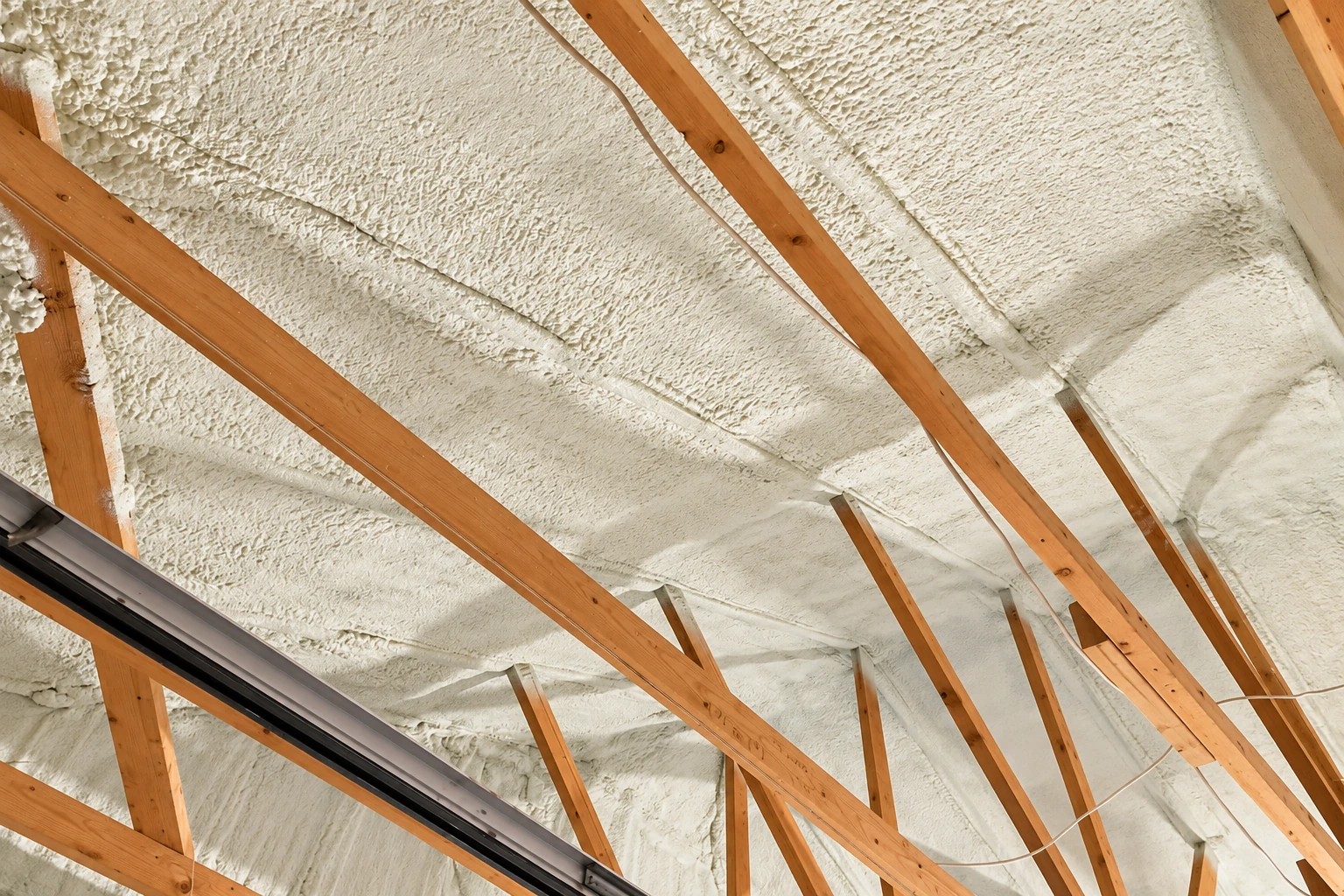
Closed-cell foam insulation in Kennewick WA - a seal that keeps out air and moisture
Cold floors or a drafty room over the garage? Closed-cell foam stops air and moisture in one dense layer where your house needs both.
- Fully licensed and insured.
- Free on-site estimates.
- Expect a reply within 1 business day.
Where we use closed-cell foam
Rim joists
The rim joist is the board around the edge of your floor framing, and it leaks a lot of air, so foam there seals and insulates in one pass.
Crawl space and basement walls
Concrete walls that sit partly underground can stay damp, and closed-cell suits them because it won't soak up water the way softer insulation does.
Is closed-cell foam the right insulation for my house?
Closed-cell foam insulation is a dense, rigid spray foam we install in Kennewick homes where a space has to stop moisture as well as air, such as rim joists and crawl space walls, so one layer does both the sealing and the insulating.
Most people call because the floors are cold, the room over the garage never warms up or the power bill keeps climbing, and closed-cell foam is one of a few ways to fix that. The price moves with how many square feet need foam, how thick it goes on, how hard the space is to reach and whether old or damaged insulation has to come out first, while the schedule turns mostly on prep and the time your family spends out of the house as the foam cures. Your estimate writes out what we plan to do and why, so you see your own figure before you agree to anything. If the cold is coming from under the whole floor, crawl space insulation may be part of the answer too.
Closed-cell foam and the prep around it
I start by asking what the space has to stop. We use closed-cell where it has to stop moisture as well as air, and if open-cell foam would do just as well, I'll tell you.
Checking what's there
We look at the old insulation and the wood before spraying, because foam over wet or dirty material just seals the problem in.
Clearing and masking
Our crew pulls out damaged material and covers anything nearby that shouldn't get foam, so the spray lands only where it belongs.
Spraying in even layers
We build the foam up in passes to an even depth, corners and edges included, since thin spots at the edges let air slip through.
Cleanup before we leave
We trim back overspray and haul off the scraps, the same routine we follow on commercial insulation jobs for shops and offices.
Why Kennewick homeowners call Reliable Kennewick Insulation Services
I learned insulation on another contractor's crew and started this business in Kennewick in 2013. I care most about the far corners nobody sees once we leave, and I want you to know what you're paying for. Call (509) 396-5461 to set up a visit.
I look at your space myself
I come out to look at each job myself, so the person writing your estimate has already seen your rim joists and walls before anyone talks about a price.
Fully licensed and insured for your job
We're fully licensed and insured, so the crew working under your floor is covered and you aren't the one carrying that risk while the work is going on.
Repairs named before foam goes in
If wet wood or a leak needs fixing before we can spray, I'll tell you plainly instead of working around it and sealing it in. Satisfaction guaranteed.
What happens when you call about closed-cell foam in Kennewick?
Spray foam means everyone in the house steps out for a while, so we set the work day once you know where you'll stay and plan the rest around your household.
or call (509) 396-5461
You call or send the form
When you call (509) 396-5461 or send the form, we set a time for me to come out and see the space.
I look and ask questions
I look at the rim joists, walls or crawl space and ask how the house has been behaving, like cold floors or a rising power bill.
A written, step-by-step estimate
You get a written estimate with each step in order and why. Our installers do the work, and I check it before walking you through what we did.
Get a written estimate for closed-cell foam and the prep around it
Tell us the area, its rough size and how your house is heated, and we'll reply within one business day to set up my visit. The estimate is free, at your home, with no pressure to book.
Closed-cell foam questions we hear
Is closed-cell or open-cell spray foam better for my house?
Closed-cell is the better pick where a space has to stop moisture vapor as well as air, and open-cell can be enough where it only needs to stop air. At typical thickness closed-cell holds back almost all moisture vapor, while open-cell blocks airflow but lets vapor pass. Each inch of closed-cell also rates R-6, the number that tells you how well insulation slows heat.
How much does closed-cell spray foam cost, and why is it more than open-cell?
Closed-cell spray foam usually costs about $1 to $1.50 per board foot across the US, a board foot being one square foot of foam one inch thick, and that's the national going rate, not our price. It runs higher than open-cell mainly because it expands less, so filling the same space takes more material. Your written estimate shows what your job needs and why.
Are there insulation rebates in Kennewick for low-income homes?
Yes, Benton PUD runs a low-income program with rebates on weatherization projects such as insulation, for electrically heated single-family and manufactured homes in its service area. Benton Franklin Community Action Connections checks your income, and contractors approved for the program have to do all the work.
How long do we have to stay out of the house after spray foam insulation?
Everyone living in the home should be out while spray foam goes in, according to EPA guidance, and some makers recommend waiting 24 hours after a professional install before coming back. That wait can vary by product, so plan somewhere for the family and pets to stay through the spraying and the time after it. Ask us for the maker's re-entry time, when you can come back, for the foam on your job.
What is the best way to insulate rim joists?
Spray foam is usually the best way, because it air-seals and insulates rim joists in one step. Closed-cell counts as an air barrier at a finished thickness of 1.5 inches or more, where open-cell needs 5.5 inches or more, so a thinner layer does the job. Federal guidance says foam over 3.25 inches thick, or in a space people live in full time, needs a covering such as drywall, and where local rules differ it points you to local code officials.
How do I check that an insulation contractor is registered in Washington?
Look them up on the state Labor & Industries Verify tool, which shows whether a contractor has an active registration and a paid-up workers' comp account. Washington requires every construction contractor to register with the state, and state law requires them to be bonded and insured. The tool also lists safety violations and any lawsuits against a contractor's bond.
Other insulation work you may need
Open-cell foam insulation
Open-cell foam is softer and costs less, and it can suit walls and rooflines where stopping air matters more than stopping moisture vapor.
Explore Open-cell foam insulationCommercial insulation
Shops, offices and rental buildings get the same careful prep and even coverage, which matters when you're the one paying the bill on a bigger space.
Explore Commercial insulationCrawl space insulation
If your floors stay cold after the rim joists are sealed, the crawl space walls or the underside of the floor may need insulating as well.
Explore Crawl space insulation
Closed-cell foam insulation in Kennewick and nearby
Before any foam goes in, we check with the city or county building office on whether your job needs a permit, and when it does, we take care of it with them, because rules differ from one city to the next and we'd rather ask than assume. On basements, the state's rule has insulation on the inside of a wall that sits partly underground run from the top of the wall down to the basement floor, with a rigid board between the concrete wall and the slab to act as a thermal break, a strip that keeps cold from passing straight through. We lay out basement foam work to match it.
Most of our calls here are cold floors, drafty rooms and bills that keep climbing, in older houses and newer ones, and we see the same on jobs in Pasco and Richland. I'll ask how old your house is and how it's heated, because that tells me where the air and damp are likely getting in.