
Basement insulation in Kennewick WA - sealed walls and warmer floors upstairs
Cold floors, a chilly basement or a power bill that keeps climbing? We insulate and seal your foundation walls so the heat stays inside.
- Fully licensed and insured.
- Free on-site estimates.
- Expect a reply within 1 business day.
Basement insulation we install in Kennewick
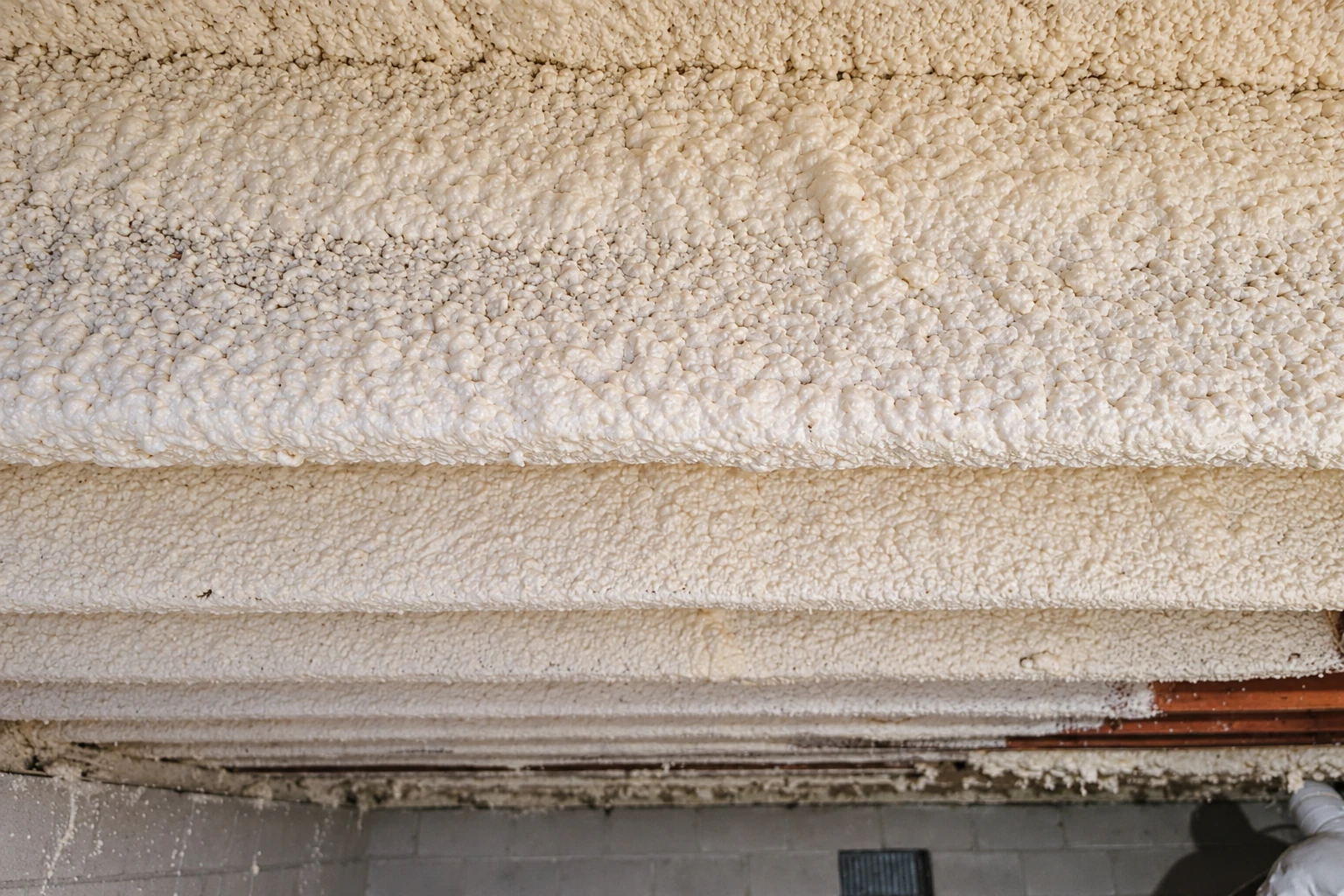
Closed-cell spray foam
Dense foam sprayed right onto the concrete that seals air and blocks moisture in one layer. It suits walls that sweat or feel damp in winter.
Rigid foam board
Foam panels glued tight to the foundation wall with every seam sealed. It's a solid choice for a dry wall you plan to frame and finish later.
Fiberglass in a framed wall
Kraft-faced batts in a stud wall, usually built in front of a foam layer. It suits basements being turned into finished rooms with drywall.
Rim joist sealing
The band of wood sitting on top of the foundation, sealed and insulated so warm indoor air can't reach that cold board. Most basement jobs include it.
What does it take to insulate a basement in Kennewick?
Basement insulation in Kennewick means insulating and sealing your foundation walls, usually from the inside, so the heat you pay for stays in the house and damp air has fewer cold spots to settle on.
Most people call us because the floors over the basement feel cold, the space down there is too chilly to use, or the power bill keeps creeping up each winter. The price turns on how much wall there is, whether it's poured concrete or block, which material the walls call for and whether a finished wall has to come down first. The schedule depends mostly on clearing the walls and fixing any damp before we start, and on covering the foam once it's in. If your house sits over a crawl space instead, crawl space insulation is the closer fit. Either way, your estimate puts your own job in writing, step by step, before you decide anything.
Basement insulation, sealing and covering
Moisture drives most of the choices in a basement, so we pick the material and the method around keeping your walls dry and every seam tight.
Checking for damp first
I look for damp spots, white crust on the block and old water lines first, because insulation over a wet wall just hides the problem.
Choosing foam or board
Damp walls usually get closed-cell foam, while open-cell foam or glued foam board can work where the concrete stays dry.
Sealing the rim joist
We seal the rim joist above the wall with foam instead of stuffing in batts, because indoor air reaching that cold wood can condense.
Tight edges and seams
Boards go on fully glued with every edge and seam sealed, since a gap behind a board lets damp air in to settle.
Covering the foam
Any foam we spray down there gets covered with fire-rated paint or drywall, and we plan that step into the job from the first visit.
Why Kennewick homeowners choose Reliable Kennewick Insulation Services
I care most about the parts you won't see once we leave, like the back corner behind the furnace or the rim joist over the water heater. I'd rather explain what you're paying for before you agree to it, and tell you plainly if something needs fixing first.
I look at every basement myself
I come out to see each job in person, and our installers do the work with me checking it before we finish, so the person who sized it up answers for it.
Insulating Kennewick homes since 2013
I learned this trade on another contractor's crew and started this business here in 2013. We're best known for sealing the gaps in attics and crawl spaces before any insulation goes in.
Fully licensed and insured
We're fully licensed and insured, which protects you if something goes wrong while our crew is working in your basement. It's fair to ask every contractor you talk to for the same.
What happens after you call about your basement?
We plan a basement job around what's down there now, your stored things, any finished rooms and how the walls behave through the year, so you know the order of the work before we start.
or call (509) 396-5461
Call or send the form
Call (509) 396-5461 or use the form, and we'll set a time for me to come out and see the basement.
I look at the walls
I check the walls, the rim joist and any damp spots, and ask how the house has been behaving through the seasons.
You get it in writing
Your written estimate lists each step in the order we'd do it and why. Our installers do the work, and I check it and walk you through it at the end.
Get a written plan for your basement walls and rim joist
Tell us whether your walls are poured concrete or block, whether the basement is finished and where you've seen damp. We'll reply within one business day to set up your free on-site estimate, with no pressure to book.
Basement insulation questions we hear
How much does it cost to insulate a basement in Kennewick?
The cost comes down to how much wall there is, which material your walls need and how much prep comes first, so I price it after seeing the basement. Closed-cell foam costs more than board or fiberglass, a finished basement adds the work of taking drywall down and putting it back, and any damp has to be dealt with before we insulate. Call (509) 396-5461 and I'll come take a look.
What is the best way to insulate basement walls that get damp?
Closed-cell spray foam gives the best moisture control of any insulation used on the inside of foundation walls, according to federal energy research, and it makes an excellent air barrier. Open-cell foam stops air well too, but it needs a thicker coat to give the same protection against vapor. On walls that show damp, closed-cell is usually where I'd point you.
Should I put plastic sheeting over fiberglass in a finished basement?
No. Federal energy guidance says plastic sheeting and foil-faced sheathing should stay off the room side of fiberglass in a basement, because they can trap moisture inside the wall. Kraft-faced batts or latex paint on the drywall do that job instead, and the same research says fiberglass and cellulose shouldn't touch the foundation wall, so ask any installer where theirs will sit.
How long does it take to insulate a basement?
Most of the time on a basement job goes into prep and covering rather than the insulation itself, so an empty, unfinished basement moves faster than a finished one where drywall comes down first. Fixing damp and covering any foam both add steps. If we spray foam, I'll tell you ahead of time when it's fine to go back down there.
How do I stop losing heat through my basement in Kennewick?
Insulating and sealing the foundation walls is the main fix, since federal research puts about 10% to 30% of a home's total heat loss through the basement. That's often what's behind cold floors upstairs and a power bill that climbs every winter.
What should a Washington insulation contractor have before working on my house?
Washington requires every construction contractor to register with the state Department of Labor & Industries and to be bonded and insured. Ask for that before anyone starts on your basement. It's a fair question for the first visit, us included.
Work that often goes with it
Closed-cell foam insulation
If your basement walls sweat or smell musty, this dense foam seals air and holds back moisture in a single layer before it's covered.
Explore Closed-cell foam insulationOpen-cell foam insulation
A lighter foam that seals air and fills odd-shaped cavities, often the better value on dry walls and in rooms above the basement.
Explore Open-cell foam insulationAir sealing services
Drafts often start at gaps around pipes, wires and the rim joist, and sealing those first lets any insulation you add actually do its job.
Explore Air sealing services
Basement insulation in Kennewick and the cities around it
Kennewick builds to Washington's state codes, energy code included, and whether your basement job needs a permit is something we confirm before work starts. I check with the city's Building Safety Division or the county building office, and when a permit's needed, we take care of it with them, because the rules change from one city to the next and I'd rather ask than assume.
Insulating the outside of basement walls can work well for moisture and heat loss, as long as the boards are kept dry while they go in. The city rates termite damage here as slight to moderate, though, and federal research says exterior insulation shouldn't be used where termites are a problem, so if you're weighing foam on the outside, ask me about termite signs at your house first. We weigh the same thing on basements in Richland and Pasco, and across the cities around Kennewick on both sides of the state line.